Stress does not always begin with obvious pain. It may appear as raised shoulders, a tight jaw, a tired back, shallow breathing, or a mind that remains busy long after the workday ends. For people comparing Massage for stress relief San Francisco options, the most relaxing treatment is not necessarily the one with the strongest pressure.
Swedish, Thai aroma, hot stone, traditional Thai, and focused neck and shoulder massage can all create different experiences. The right choice depends on where tension is felt, whether stillness or movement feels more calming, and how the body responds to pressure. This guide explains how the main massage styles compare, what to expect during a session, and how to choose an appropriate appointment length.
How Stress Can Show Up in the Body
Everyday stress often changes the way the body is held. The shoulders may gradually lift, the muscles around the neck can remain contracted, and the upper or lower back may feel tired after sitting, driving, or looking at a screen. Some people notice physical tension first, while others primarily experience mental fatigue, restlessness, or difficulty switching off.
These patterns matter when selecting a massage. General mental overload may suit a slower full-body treatment, while concentrated neck or shoulder tension may benefit from more focused work. Persistent muscle knots may call for a different approach than sensitivity caused by exhaustion or lack of rest.
Massage can form part of a general wellness routine, but it is not a diagnosis or a replacement for medical care. Severe, unexplained, worsening, or radiating pain needs appropriate assessment rather than an ordinary relaxation appointment.
How Massage May Support Stress Relief
A massage appointment creates time away from work, screens, noise, and repetitive demands. Comfortable pressure, steady movements, supportive positioning, and a quiet environment may help the body feel less guarded. Massage may also provide short-term relief from everyday muscular tension, although responses vary between individuals.
The National Center for Complementary and Integrative Health notes that research findings differ by health condition and study quality. Benefits should therefore be described realistically rather than as guaranteed results. The UCSF Health overview of massage also discusses massage as a complementary approach used for stress, fatigue, and general wellness.
Pressure preference is especially important. Firm massage can feel satisfying when muscles are chronically tight, but it may be overstimulating when the main goal is to rest. Light or medium pressure is not a weaker treatment when it better matches the intended experience.
Which Massage Is Best for Stress Relief?
No single massage style suits every form of stress. The following comparison offers a starting point based on pressure, technique, and the type of experience commonly expected.
| Massage style | Typical pressure | Main approach | Often chosen for |
|---|---|---|---|
| Swedish Massage | Light to medium | Smooth, flowing strokes | Mental overload, first visits, and full-body relaxation |
| Thai Aroma Massage | Adjustable | Massage techniques with aromatic oil | A calming, oil-based sensory experience |
| Hot Stone Massage | Light to medium | Warm stones combined with massage | Warmth, slower pacing, and muscle relaxation |
| Traditional Thai Massage | Light to firm | Compression and assisted stretching | Stiffness, restlessness, and active bodywork |
| Neck & Shoulder Massage | Adjustable | Focused upper-body techniques | Stress held in the neck, shoulders, and upper back |
| Foot Massage | Light to medium | Focused work on the feet and lower legs | Standing, walking, and localized relaxation |
| Deep Tissue Massage | Medium to firm | Slow, concentrated pressure | Persistent tightness and stubborn muscular knots |
Swedish Massage for Gentle Full-Body Relaxation
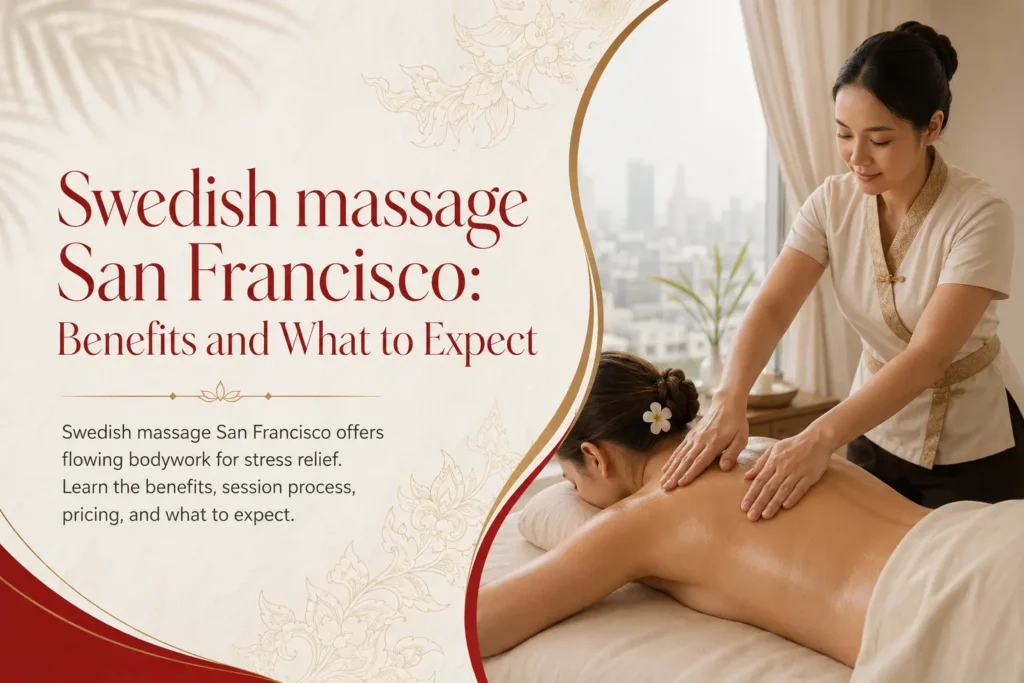
Swedish massage is a practical starting point when the main goal is to slow down and rest. The therapist uses oil or lotion with broad, flowing movements and kneading. Pressure usually stays within a light-to-medium range but can be adjusted during the appointment.
This style suits first-time guests, people who prefer passive bodywork, and anyone who feels mentally tired or sensitive to stronger pressure. The detailed guide to Swedish massage for relaxation explains its techniques, appointment process, and differences from Thai and deep tissue massage.
Thai Aroma Massage for a Calming Sensory Experience
Thai aroma massage combines massage techniques with aromatic oil. It offers a smooth, sensory-focused experience for people who enjoy oil-based treatment but still want pressure adjusted around areas of tension.
Before the session, any fragrance sensitivity, skin reaction, or allergy should be discussed. Aromatic oil can contribute to the atmosphere, but it should not be presented as a treatment for anxiety or another medical condition.
Hot Stone Massage for Warmth and Slower Pacing
Hot stone massage combines warm stones with manual massage techniques. Warmth may feel comforting when muscles are tense and a slower session is preferred. Temperature should always remain comfortable, and feedback is appropriate whenever a stone feels too warm.
This option may suit someone who relaxes through warmth rather than firm pressure. It can also provide an unhurried experience during cooler San Francisco days without requiring an intense deep tissue session.
Traditional Thai Massage for Stretching and Movement
Traditional Thai massage follows a more active format. Rhythmic compression, assisted stretching, and guided movement are used instead of relying on long oil-based strokes. It may suit someone who feels stiff or restless and finds movement more relaxing than lying completely still.
Intensity remains adjustable. A Thai massage does not need to involve extreme stretching or painful pressure. The guide to authentic Thai massage in San Francisco provides a closer look at the traditional techniques and first-session experience.
Is Deep Tissue Massage Always Better for Stress?
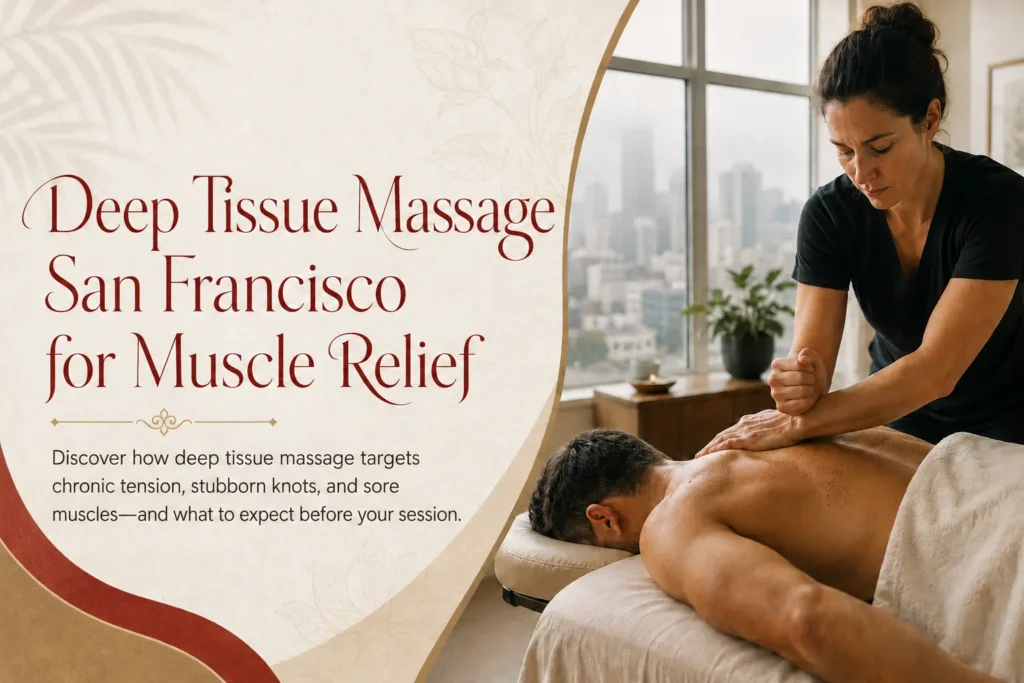
Deep tissue massage is not automatically the best choice simply because it uses firmer pressure. It is generally more appropriate when stress is accompanied by persistent muscular tightness or a specific area that never seems to loosen.
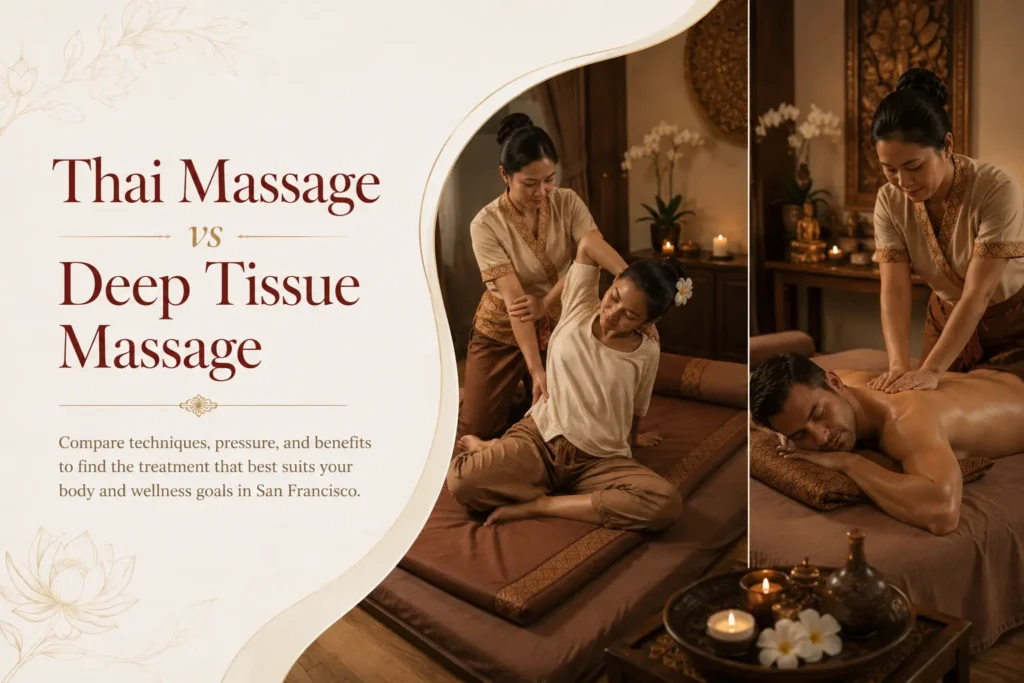
When the body already feels exhausted or sensitive, concentrated pressure may make it harder to relax. Swedish or Thai aroma massage may offer a closer match in that situation. The comparison of Thai massage vs deep tissue massage can help clarify whether stretching or focused pressure fits the intended goal.
How to Choose Based on the Way Stress Feels
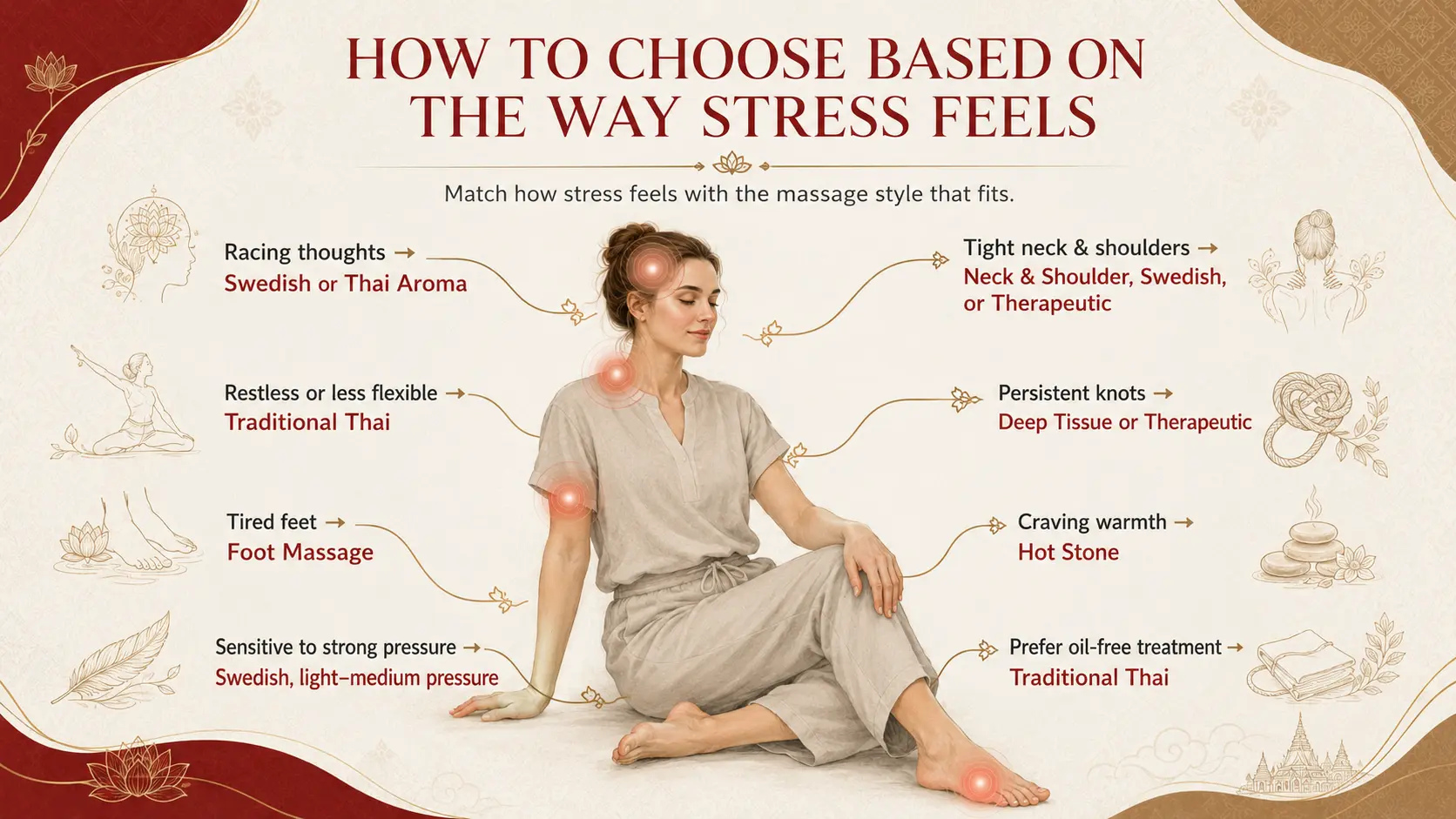
The most useful choice starts with the experience expected after the appointment. Rather than booking by treatment name alone, consider how stress currently feels:
- Racing thoughts or mental overload: Swedish or Thai aroma massage may provide a slower, more passive experience.
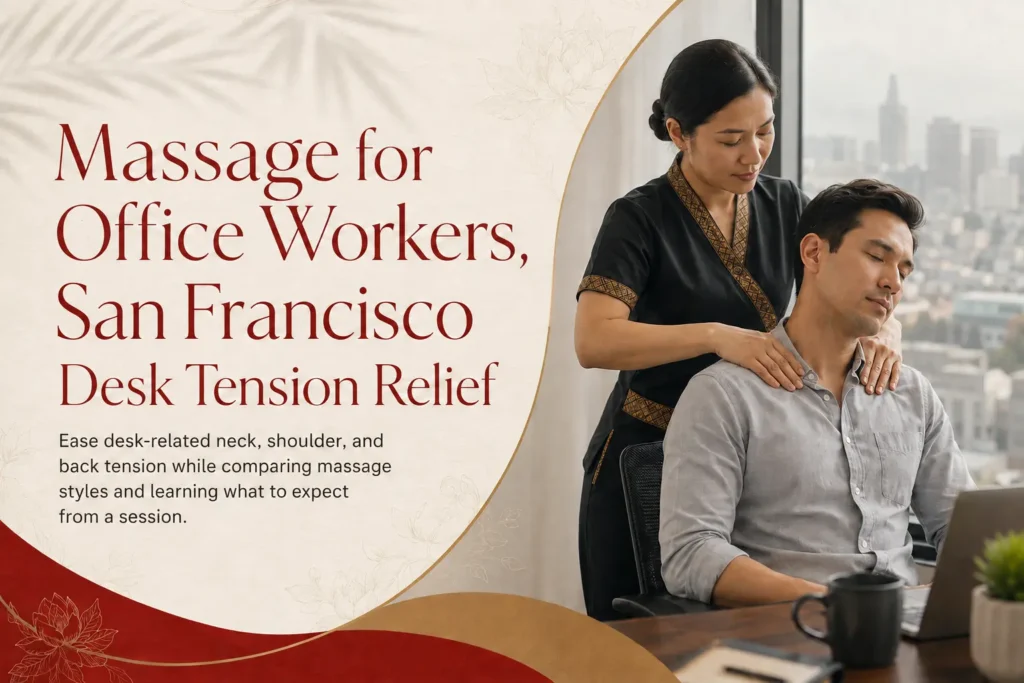
- Tight neck and shoulders from desk work: Neck and shoulder, Swedish, or therapeutic massage allows more attention on the upper body.
- Restlessness and reduced flexibility: Traditional Thai massage introduces compression, stretching, and movement.
- Persistent knots in one area: Deep tissue or therapeutic massage may provide more concentrated work.
- Tired feet after standing or walking: Foot massage offers localized treatment without requiring a full-body session.
- Preference for warmth: Hot stone massage adds heat while keeping the pace calm.
- Sensitivity to strong pressure: Begin with Swedish massage and request light-to-medium pressure.
- Preference for oil-free treatment: Traditional Thai massage may be the more suitable option.
Two people with similar stress levels may still prefer completely different treatments. Comfort with oil, stretching, heat, conversation, and pressure can influence relaxation as much as the treatment name.
Should a Stress-Relief Massage Be 60, 90, or 120 Minutes?
60 Minutes
A 60-minute appointment works well for a first massage, a general full-body session, or focused attention on one or two areas. It provides enough time to learn how the body responds to pressure without committing to a longer treatment.
90 Minutes
Ninety minutes allows a slower full-body pace with additional time for the neck, shoulders, back, or legs. This duration often suits a combination of relaxation and focused muscle work because the therapist does not need to rush between areas.
120 Minutes
A 120-minute appointment offers the most time for several areas and an unhurried full-body treatment. More time does not mean stronger pressure. It simply allows techniques to progress gradually while maintaining a comfortable rhythm.
Current durations, massage options, packages, and prices can be reviewed on the massage services and pricing page before booking.
What to Expect During a Relaxation-Focused Massage
Before the Session
A short consultation should cover the intended goal, preferred pressure, areas of tension, and areas to avoid. Recent injuries, health conditions, medications, pregnancy, skin sensitivities, or allergies relevant to the treatment should also be mentioned. This information allows the therapist to adjust positioning and technique.
During the Session
Pressure can change at any time. One area may tolerate firm work while another needs a gentler approach. Sharp pain, numbness, tingling, or involuntary bracing are reasons to request an immediate adjustment. Room temperature, bolsters, positioning, and the amount of conversation can also be changed to support comfort.
After the Session
Some guests feel sleepy, while others feel clear-headed or refreshed. Sitting up slowly before standing can make the transition more comfortable. Leaving a little space after the appointment may also preserve the relaxed feeling better than returning immediately to a crowded schedule.
When Should Massage Be Postponed?
Massage may need to be postponed or modified when there is a fever, active infection, open wound, recent operation, fresh injury, suspected blood clot, or severe unexplained pain. Pregnancy, complex medical conditions, and medication affecting blood clotting may require additional guidance or specialized positioning.
Severe swelling, weakness, persistent numbness, radiating pain, or symptoms following a serious injury require medical attention. Massage should not delay evaluation of a concerning symptom. When uncertainty exists, guidance from a qualified healthcare professional should come before the appointment.
Massage for Stress Relief at Palms Thai Massage
Palms Thai Massage in San Francisco offers Swedish, traditional Thai, Thai aroma, hot stone, foot, neck and shoulder, therapeutic, and deep tissue massage. Sessions can be adjusted around pressure preference, comfort, and the areas needing attention.
The studio is located at 5754 Geary Blvd in San Francisco’s Richmond District and is open daily. Before selecting Massage for stress relief San Francisco services, reviewing the treatment descriptions and deciding whether the priority is stillness, warmth, stretching, or targeted muscle work can make the booking process easier. First-time guests may also review client reviews and testimonials for additional context.
Frequently Asked Questions
What type of massage is best for stress relief?
Swedish massage is often a practical starting point for gentle full-body relaxation. Thai aroma and hot stone massage may suit those who prefer oil, scent, or warmth. Traditional Thai massage may be more appropriate when stretching and movement feel relaxing.
Is Swedish or deep tissue massage better for stress?
Swedish massage generally prioritizes relaxation with broad movements and lighter pressure. Deep tissue massage is more focused and may suit persistent muscular tightness. Stronger pressure is not automatically more effective for general stress.
Can massage help stress-related neck and shoulder tension?
Massage may provide temporary relief when the discomfort comes from muscular tension. Focused neck and shoulder massage allows more appointment time for the upper body. Severe, worsening, or radiating pain should receive medical assessment.
How long should a first relaxation massage be?
Sixty minutes offers a sensible first appointment. Ninety minutes provides a slower full-body pace and more time for specific areas. The most appropriate duration depends on comfort, goals, schedule, and familiarity with massage.
Should massage pressure be firm to relieve stress?
No. Pressure should remain comfortable and can be adjusted throughout the session. Light-to-medium pressure may be more suitable when rest and mental relaxation are the main goals.
How often should massage be scheduled for stress relief?
There is no universal schedule. Frequency depends on lifestyle, budget, response after each appointment, and how quickly tension returns. The first session can provide useful information for planning future visits without committing to an unnecessary routine.
Finding a Massage Style That Feels Restorative
The right massage for stress relief depends on how the body and mind feel on that particular day. Swedish massage offers passive full-body relaxation, Thai aroma adds a sensory element, hot stone introduces warmth, and traditional Thai massage uses stretching and movement. Deep tissue is better reserved for persistent muscular tightness rather than chosen only because it feels more intense.
When comparing Massage for stress relief San Francisco appointments, begin with the preferred pressure, treatment style, and session length. Clear communication before and during the massage gives the therapist the information needed to create a comfortable, appropriately paced experience.