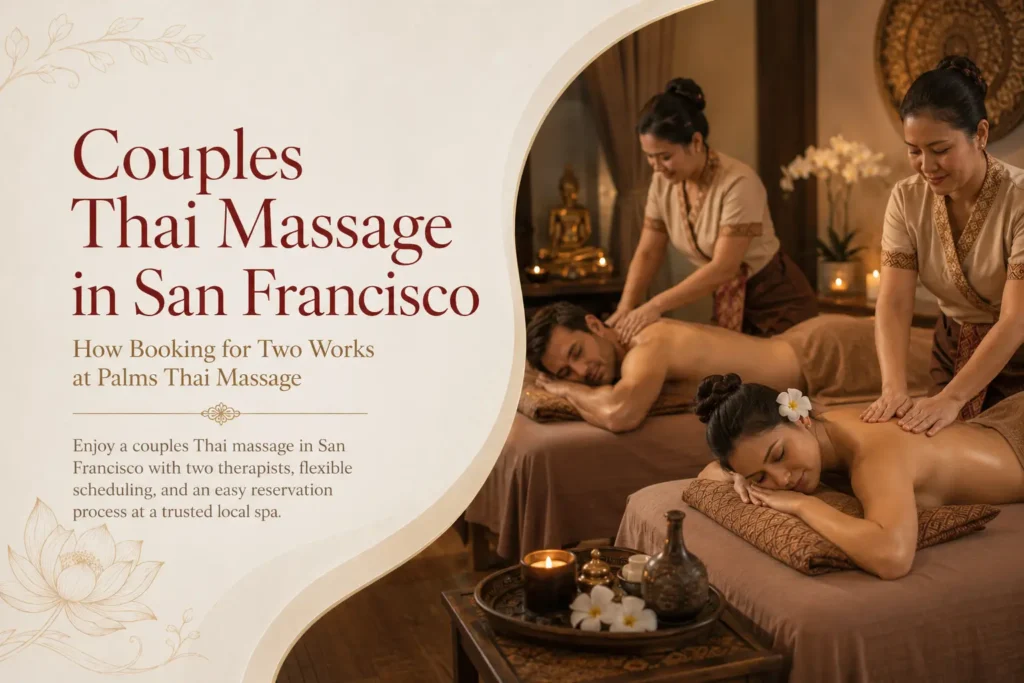
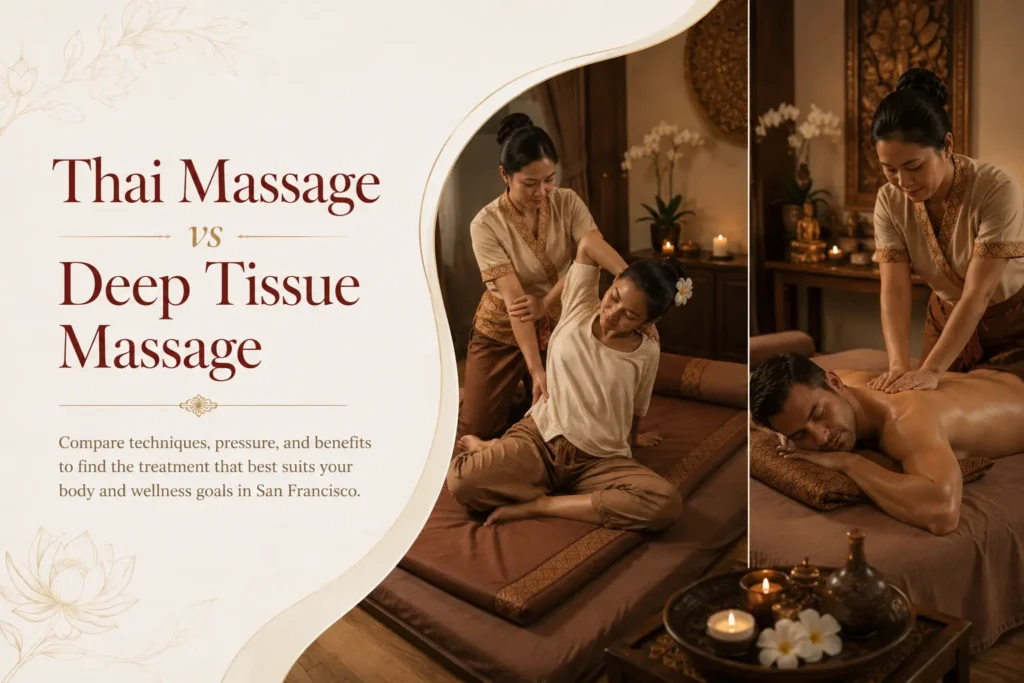
Choosing between Thai massage vs deep tissue massage is a common decision for many spa visitors. Both styles ease tension and help the body feel lighter, yet they work in almost opposite ways. One moves and stretches the body along traditional energy lines. The other applies firm, targeted pressure into the deeper muscle layers instead. Comparing Thai massage vs deep tissue massage makes it easier to pick the right treatment. The body might need more flexibility and calm, or focused relief from one stubborn tight spot. Palms Thai Massage in San Francisco offers both treatments side by side. Knowing what sets them apart leads to a better booking decision, rather than picking one at random.
What Is Thai Massage?
Origins and Technique
Thai massage, sometimes called Nuad Boran, is a traditional bodywork practice from Thailand. It developed more than 2,500 years ago. Many credit its creation to Jivaka Kumar Bhaccha, a physician who reportedly served during the Buddha’s time.
A therapist guides the body through assisted stretches, rhythmic compression, and acupressure. Oil and long gliding strokes play no part in this style. These techniques follow the body’s energy pathways, known as Sen lines. Sessions take place fully clothed on a padded floor mat rather than a table. This setup allows a much wider range of movement than a table-based treatment offers. The result feels closer to a guided, passive form of yoga than a conventional massage. People sometimes nickname Thai massage “lazy man’s yoga” for this reason. A therapist may use hands, elbows, knees, and even feet to move the body through each stretch. Pressure ranges from light to firm, depending on comfort and experience level.
Key Benefits of Thai Massage
Clients often notice these effects after just one session:
- Improves flexibility and joint mobility
- Encourages circulation and energy flow throughout the body
- Eases everyday stress and mental fatigue
- Supports full-body relaxation without the use of oil
- Adjusts easily to a wide range of pressure preferences
Full Thai massage pricing and session lengths appear on the services page, alongside every other treatment the spa offers.
What Is Deep Tissue Massage?
Technique and Approach
Deep tissue massage takes a more Western, therapeutic approach to bodywork. A therapist uses slow, deliberate strokes and firm, sustained pressure with oil on a massage table. This approach works through the outer muscles to reach deeper layers of tissue and fascia underneath. The goal is to release chronic tension, break up adhesions, and loosen tight muscle fibers. Over time, these fibers tighten from posture, repetitive movement, or old injuries. Therapists often use knuckles, forearms, and elbows to apply steady pressure along and across the muscle fibers. This more targeted pressure means sessions often focus on one or two problem areas. Common targets include the lower back, neck, or shoulders, rather than the entire body at once.
Key Benefits of Deep Tissue Massage
This style often helps clients dealing with:
- Releases chronic muscle tension and stubborn knots
- Helps break down scar tissue and adhesions
- Supports recovery from sports activity or old injuries
- Improves mobility in tight, restricted areas
- Targets specific problem areas with focused, sustained pressure
The NCCIH, part of the National Institutes of Health, notes that massage therapy may help ease certain kinds of pain. Low back pain is one of the most common reasons clients choose deep tissue massage. Full deep tissue massage pricing for every session length appears on the services page.
Thai Massage vs Deep Tissue Massage: Key Differences
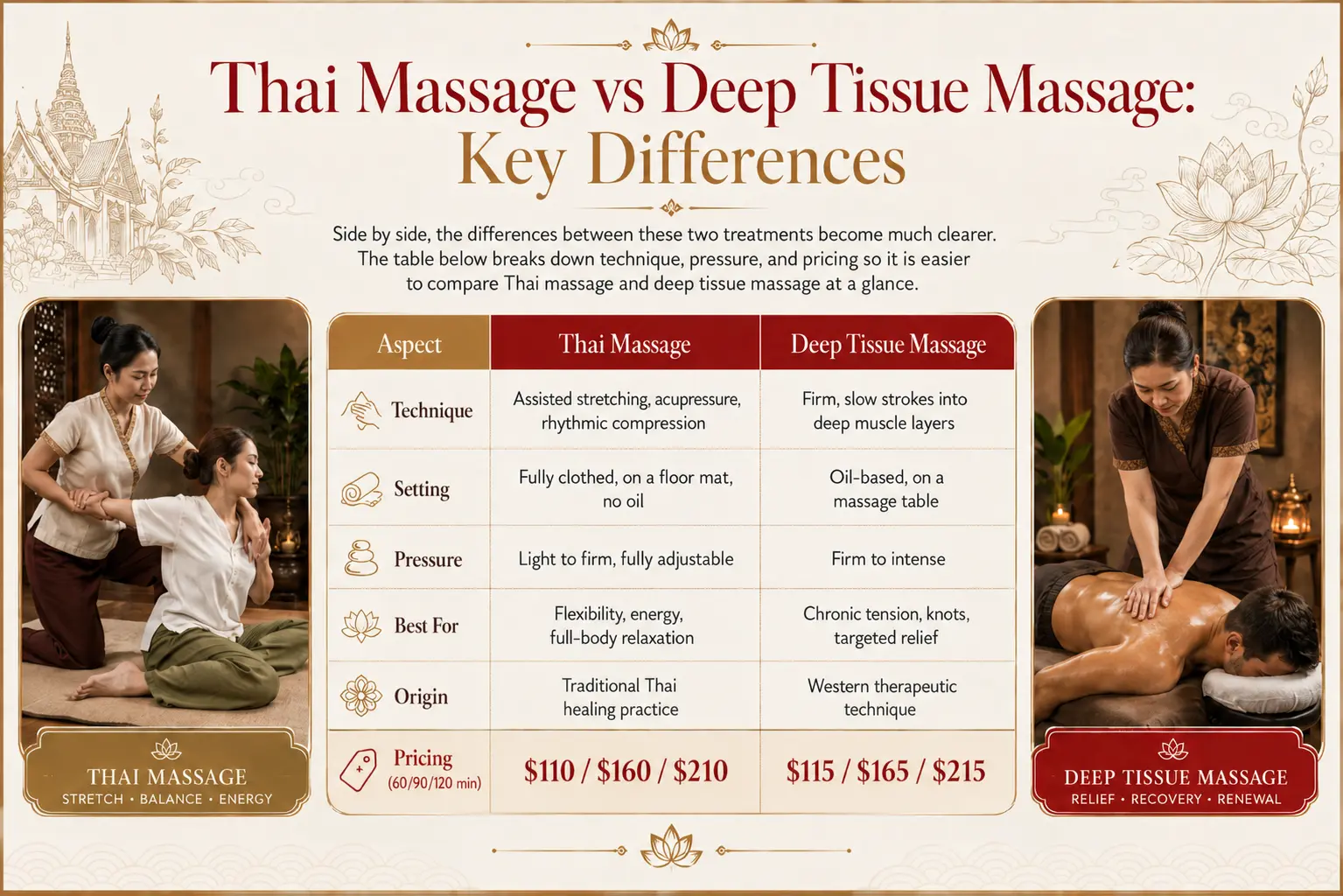
Side by side, the differences between these two treatments become much clearer. The table below breaks down technique, pressure, and pricing. This makes it easier to compare Thai massage and deep tissue massage at a glance.
| Aspect | Thai Massage | Deep Tissue Massage |
|---|---|---|
| Technique | Assisted stretching, acupressure, rhythmic compression | Firm, slow strokes into deep muscle layers |
| Setting | Fully clothed, on a floor mat, no oil | Oil-based, on a massage table |
| Pressure | Light to firm, fully adjustable | Firm to intense |
| Best For | Flexibility, energy, full-body relaxation | Chronic tension, knots, targeted relief |
| Origin | Traditional Thai healing practice | Western therapeutic technique |
| Pricing (60/90/120 min) | $110 / $160 / $210 | $115 / $165 / $215 |
Neither option is objectively “better” than the other. Each simply serves a different goal, which is exactly why Palms Thai Massage offers both treatments under one roof.
Which One Should You Choose?
Deciding between Thai massage vs deep tissue massage usually comes down to one simple question. Is the goal full-body relaxation and flexibility, or focused relief for one specific area?
Choose Thai Massage If You…
This treatment tends to be the better fit when you:
- Want to improve flexibility and range of motion
- Prefer to stay fully clothed throughout the treatment
- Are looking for whole-body relaxation rather than one specific area
- Feel more mentally foggy or fatigued than physically sore
- Are trying massage for the first time and want an adjustable, approachable option
Choose Deep Tissue Massage If You…
This option tends to be the better fit when you:
- Deal with chronic tension in one specific area, like the lower back or shoulders
- Have muscle knots that have not responded well to lighter massage styles
- Are recovering from a sports injury or repetitive strain
- Prefer firmer, more concentrated pressure
- Want focused work on one problem area rather than the whole body
Many clients find they do not have to choose only one style. At Palms Thai Massage, a therapist can add deep tissue techniques to a Thai massage session. This lets the therapist spend extra time on tight areas while still covering the full body. For anyone managing a specific condition, the conditions treated page is worth a look. It outlines the kinds of tension and discomfort therapists regularly work with at the spa. Examples range from sciatica and joint stiffness to sports-related muscle tightness.
Thai Massage and Deep Tissue Massage at Palms Thai Massage in San Francisco
Palms Thai Massage sits at 5754 Geary Blvd in San Francisco’s Richmond District. The spa opens daily from 10 a.m. to 9 p.m. and offers both treatments side by side. Switching between styles, or combining them in one visit, is simple. A 60-minute Thai massage starts at $110. A 60-minute deep tissue massage starts at $115, with 90- and 120-minute options available for both treatments. Therapists train in traditional Thai techniques as well as firmer therapeutic methods. Each one adjusts the session to individual pressure preference and comfort level from start to finish. The spa accepts insurance, and new clients can also take advantage of a first-time special rate on either treatment.
Anyone still unsure which style fits best can simply share the goal for the visit. Relaxation, flexibility, and relief from one area of tension are all useful starting points. Mentioning the goal lets a therapist recommend the right approach on the spot. First-time clients can also read client reviews from others who have tried both treatments at Palms Thai Massage. A gift voucher also makes a thoughtful option for someone who could use either treatment.
Frequently Asked Questions
Is Thai massage or deep tissue massage better for back pain?
It depends on the cause. General stiffness, poor posture, or limited mobility usually responds well to Thai massage’s stretching and joint mobilization. This combination helps open up the spine and hips. Pain from a muscle knot or chronic tightness usually calls for deep tissue massage and its firmer, targeted pressure.
Can Thai massage and deep tissue massage be combined in one session?
Yes. A therapist at Palms Thai Massage can add deep tissue techniques to a Thai massage session. This allows extra time on tight or sore areas while still covering the full body during the visit.
Which is more intense, Thai massage or deep tissue massage?
Deep tissue massage generally applies firmer, more sustained pressure to reach deeper muscle layers. Thai massage uses rhythmic compression and stretching instead, and a therapist can adjust it from gentle to firm. Intensity often comes down to personal preference on the day.
Is Thai massage suitable for first-time clients?
Yes. Thai massage takes place fully clothed, and a therapist adjusts pressure to comfort level throughout the session. This makes it an approachable starting point for anyone new to massage therapy.
How much does deep tissue massage cost in San Francisco?
At Palms Thai Massage, deep tissue massage starts at $115 for 60 minutes. Clients can also book 90-minute sessions at $165 or 120-minute sessions at $215.
Both Thai massage and deep tissue massage offer real, distinct benefits. One centers on movement and energy, and the other on focused muscular release. The right choice usually comes down to what the body needs on a given day. Same-day appointments are often available at Palms Thai Massage in San Francisco. Booking a session, or a combination of both styles, is easy whenever tension starts to build up again.