Stress often shows up in the body before it becomes obvious anywhere else. For example, shoulders rise, the jaw tightens, and the back begins to feel tired after long hours at a desk or moving around the city. For anyone who wants relief without intense pressure or assisted stretching, Swedish massage San Francisco offers a calm, approachable option.
Swedish massage uses smooth, flowing movements, usually with oil or lotion. Its adjustable pressure suits first-time and regular spa guests. This guide explains the technique, experience, comparisons, and key booking considerations.
What Is Swedish Massage?
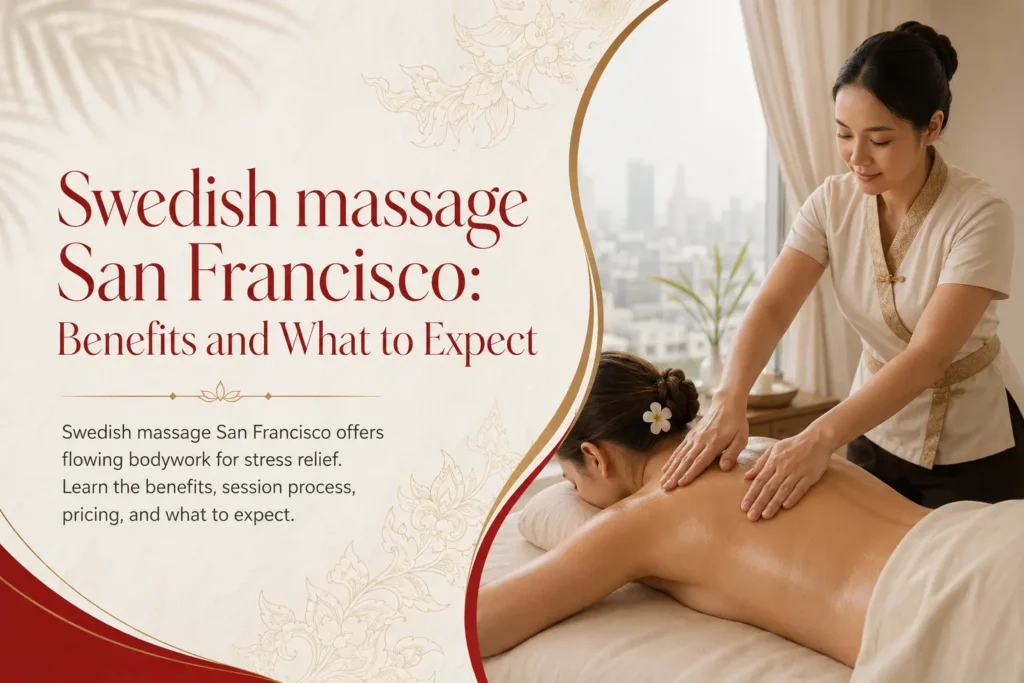
Swedish massage, sometimes called classical massage, is a table-based treatment built around continuous strokes, kneading, gentle friction, and rhythmic movements. Oil or lotion helps the hands move comfortably over the skin. For example, a session may cover the full body or give extra time to the neck, shoulders, back, or legs.
Pressure usually ranges from light to medium. However, the therapist can adjust it throughout the appointment. This steady pace addresses everyday tightness without forcing the muscles. In fact, the National Center for Complementary and Integrative Health describes Swedish or classical massage as the most common form of massage therapy in Western countries.
Common Techniques Used During a Session
Effleurage refers to long gliding strokes, while petrissage uses lifting, rolling, and kneading. Friction applies controlled circular movements to a smaller area, tapotement uses light rhythmic tapping, and the therapist may also include gentle vibration or rocking.
The techniques do not follow one fixed routine. Instead, the therapist adapts the pressure, pace, and areas of focus to the guest’s comfort and goals.
What Does a Swedish Massage Feel Like?
Overall, the experience should feel smooth, steady, and comfortable. Tense muscles may feel some pressure, but the session should not become sharply painful. Therefore, guests should request lighter or firmer pressure whenever needed.
Before the Massage Begins
Before treatment, mention recent injuries, health conditions, medications, skin sensitivities, preferred pressure, and any areas the therapist should avoid. This information helps the therapist shape the session around current needs.
Guests decide how much clothing to remove. Meanwhile, the therapist leaves the room so the guest can prepare in private. Proper draping covers the body, and the therapist uncovers only the area receiving massage. The UCSF Health overview of massage also recommends discussing symptoms, health concerns, and treatment areas beforehand.
During and After the Session
During the session, the therapist can adjust the temperature, positioning, and pressure. In particular, feedback helps when the therapist reaches a sensitive area; staying silent through discomfort does not improve the treatment.
Afterward, some people feel sleepy while others feel refreshed. For this reason, it helps to sit up slowly before standing. Still, guests should take unexpected or lasting discomfort seriously rather than view it as proof that the massage “worked.”
Potential Benefits of Swedish Massage
People exploring Swedish massage San Francisco services commonly want relaxation, temporary relief from everyday tension, and general wellbeing. The measured pace can feel welcome after a demanding workweek, a long flight, or mental overload.
However, research findings on massage vary by condition and study quality, and some benefits may be short term. Consequently, anyone with severe, persistent, or unexplained symptoms still needs medical assessment. Swedish massage can support a wellness routine without claiming to cure a health condition.
Palms Thai Massage in San Francisco offers Swedish massage as a relaxation-focused full-body treatment. Moreover, the therapist tailors each appointment to the preferred pressure, comfort level, and areas that need extra attention.
Swedish Massage vs Thai and Deep Tissue Massage
Swedish, Thai, and deep tissue massage can all address tension, but they use different methods and create different sensations.
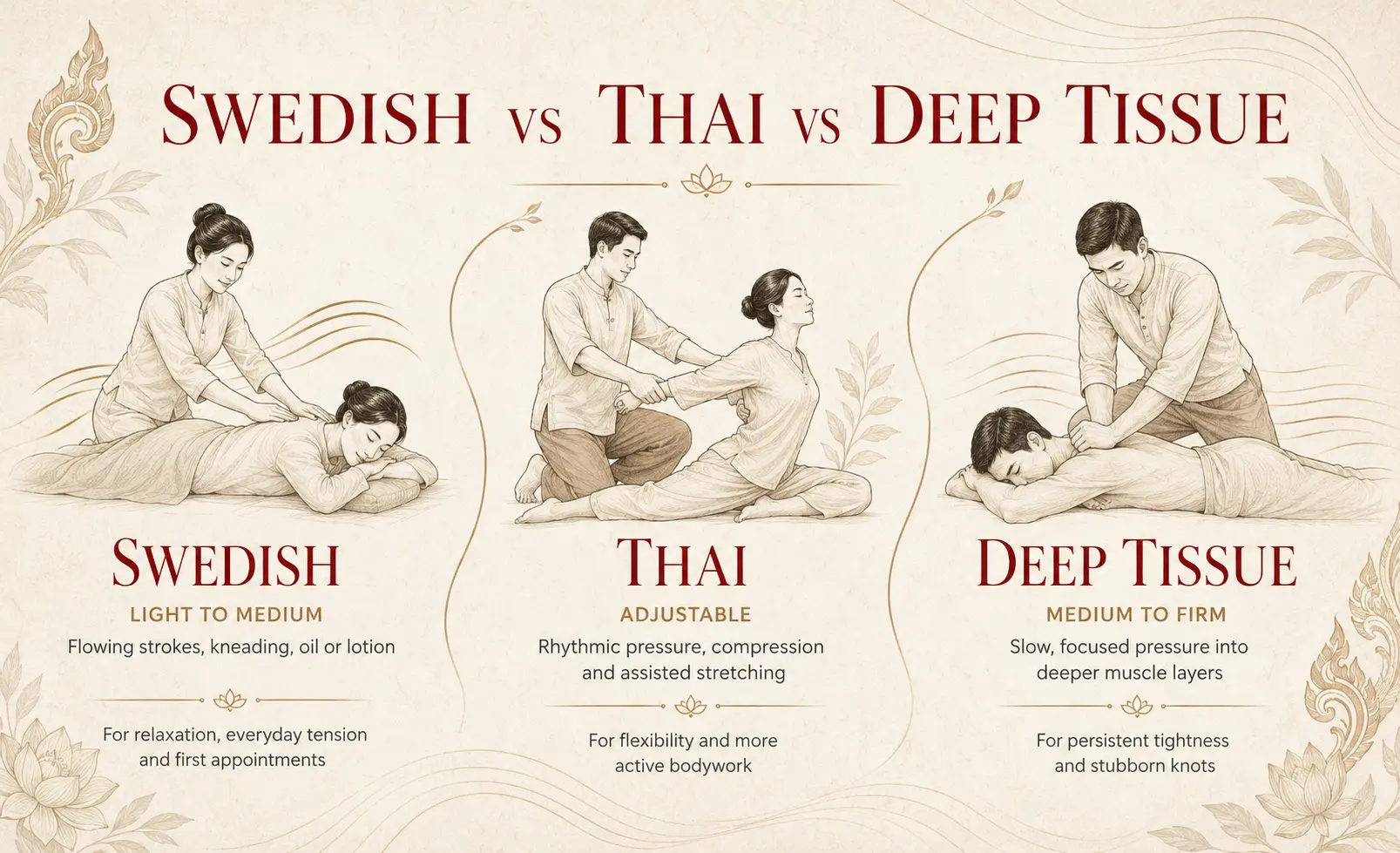
| Massage type | Typical pressure | Main techniques | Often chosen for |
|---|---|---|---|
| Swedish massage | Light to medium | Flowing strokes, kneading, oil or lotion | Relaxation, everyday tension, first appointments |
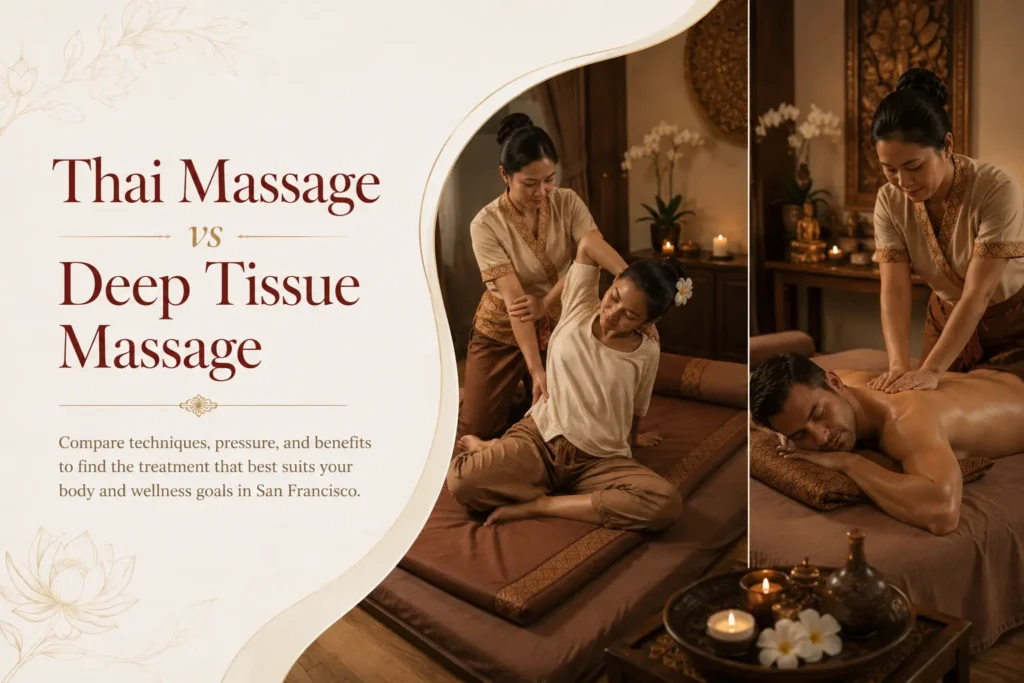
| Thai massage | Adjustable | Rhythmic pressure, compression, assisted stretching | Flexibility and more active bodywork |
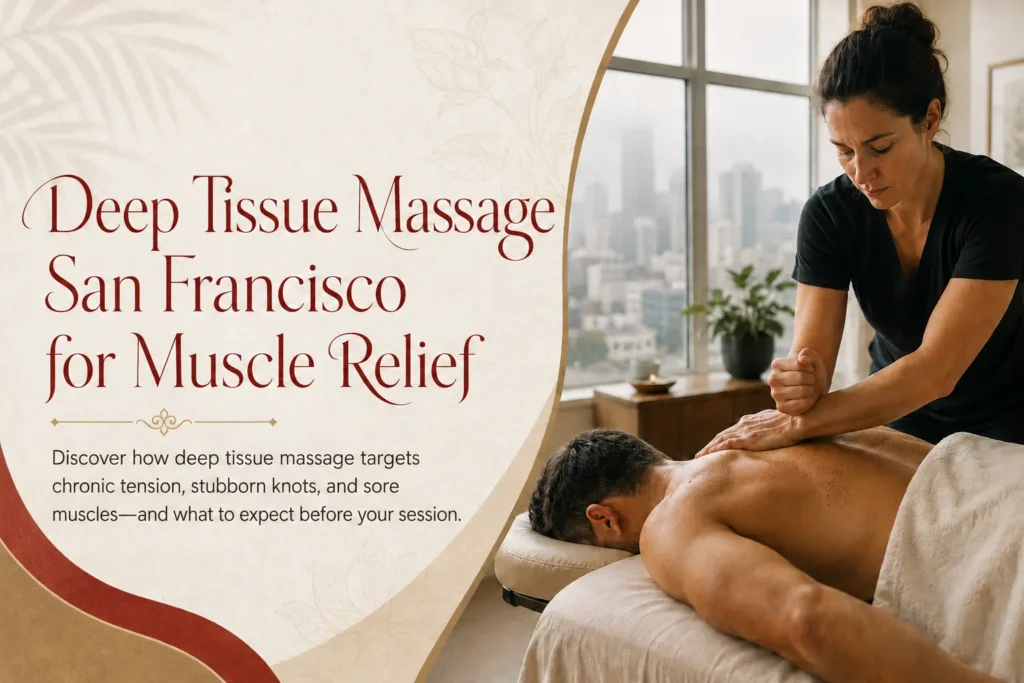
| Deep tissue massage | Medium to firm | Slow, focused pressure into deeper muscle layers | Persistent tightness and stubborn knots |
Swedish Massage vs Thai Massage
Swedish massage lets the guest rest on a table while the therapist uses oil, gliding strokes, and kneading. By contrast, therapists commonly perform traditional Thai massage through comfortable clothing and combine pressure with guided stretches and joint movement. The article on authentic Thai massage in San Francisco explains the traditional approach further.
Swedish Massage vs Deep Tissue Massage
Swedish massage generally prioritizes a soothing rhythm. On the other hand, deep tissue uses slower, concentrated pressure for deeper tightness. Firm pressure is not automatically better when the body feels tired, stressed, or sensitive. For another comparison, see Thai massage vs deep tissue massage.
Who Is Swedish Massage Best For?
Swedish massage is a practical starting point because its pace and pressure adapt easily. It suits people seeking full-body treatment without strong compression or extensive stretching. Common reasons include general stress, mild desk-work tension, and travel fatigue.
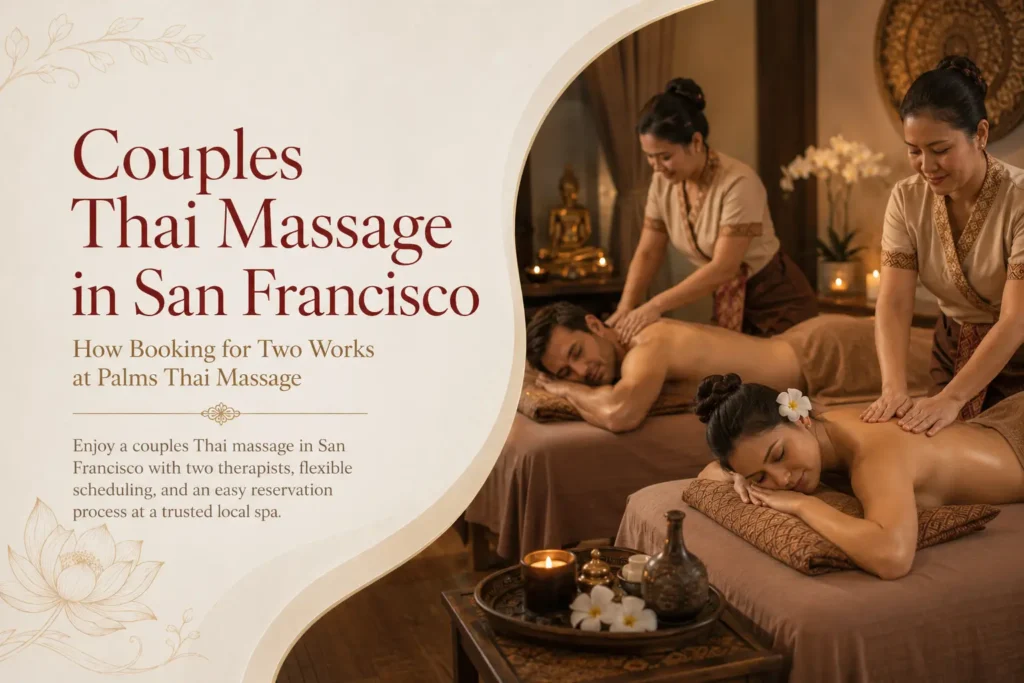
In addition, Swedish massage can work well for a shared spa visit. One guest may choose Swedish massage while the other prefers Thai, aroma, or deep tissue work. The guide to couples massage in San Francisco explains how the studio can schedule two appointments together.
For example, chronic knots may suit deep tissue or therapeutic massage, while a preference for assisted movement may point toward Thai massage. The Thai massage spa Bay Area guide offers a broader overview.
How Long Should a Swedish Massage Session Be?
60 Minutes
For a first visit, a 60-minute appointment allows time for a general full-body massage with extra attention on one or two areas. Therefore, it offers a sensible starting point.
90 Minutes
Ninety minutes allows full-body work without rushing and more attention to areas holding tension. It suits a mix of relaxation and focused work.
120 Minutes
A two-hour session offers the most unhurried experience and time for several areas. Comfort, schedule, and familiarity with massage should guide the choice.
Palms Thai Massage currently lists Swedish massage San Francisco appointments at $110 for 60 minutes, $160 for 90 minutes, and $210 for 120 minutes. However, rates and promotions can change. Therefore, check the massage services and pricing page before booking.
How to Prepare for a First Swedish Massage
- Arrive with enough time to discuss pressure and areas of concern.
- Share relevant health conditions, recent injuries, medications, and skin sensitivities.
- Mention areas that need extra attention and areas the therapist should avoid.
- Ask about the massage oil or lotion if allergies are a concern.
- Choose the amount of clothing that feels comfortable under proper draping.
- Speak up if pressure, positioning, temperature, or technique feels uncomfortable.
- Leave a little time after the appointment instead of rushing into another activity.
Preparation does not require a complicated routine. Clear communication gives the therapist the information needed to adjust the session safely and comfortably.
When Should Someone Postpone Massage?
People with severe or unexplained pain, fever, an active infection, an open wound, a recent operation, a suspected blood clot, or a fresh fracture should postpone massage and speak with a healthcare provider. Likewise, pregnancy, complex medical conditions, and certain medications may require additional guidance or a specialized treatment.
The NCCIH massage therapy guidance notes that serious adverse effects appear to be rare, but extra caution is appropriate for people at increased risk of injury. Massage should never delay medical care for a concerning symptom.
Choosing Swedish massage San Francisco Services
A local studio should make pressure, privacy, pricing, and appointment length easy to understand. A clean environment, trained professionals, clear draping, and space for questions support a comfortable experience. California residents can review voluntary professional certification information through the California Massage Therapy Council.
Guests can find Palms Thai Massage & Wellness at 5754 Geary Blvd in San Francisco. Therapists adjust appointments to preferred pressure and focus areas. The About Palms Thai Massage page explains the studio’s approach, while client reviews and testimonials offer added context.
Frequently Asked Questions
Is Swedish massage suitable for first-time clients?
Yes. Its flowing movements and adjustable light-to-medium pressure make it an approachable first massage. Before treatment begins, discuss pressure preferences and sensitive areas with the therapist.
Does Swedish massage use oil?
Usually, the therapist applies oil or lotion to reduce friction and support long, smooth strokes. During the intake conversation, mention any allergies or skin sensitivities.
What should be worn during Swedish massage?
Guests may undress to their personal comfort level. Throughout the session, a sheet or blanket stays in place, and the therapist uncovers only the current treatment area. Questions about draping are always appropriate.
Is Swedish massage supposed to hurt?
No. Some pressure around a tight area may be noticeable, but sharp or persistent pain is a reason to ask for an immediate adjustment. Effective massage does not require enduring pain.
How long should a first Swedish massage be?
Sixty minutes is usually enough for a first full-body session. Ninety minutes offers a slower pace and more time for specific areas. The best duration depends on comfort, goals, and schedule.
How is Swedish massage different from deep tissue massage?
Swedish massage uses broad, flowing movements and typically lighter pressure for relaxation. Deep tissue massage works more slowly and firmly on deeper layers and specific areas of chronic tightness.
Final Thoughts
Swedish massage combines flowing movement, adjustable pressure, and full-body relaxation. As a result, it suits first appointments, everyday stress, and general tension that does not require intense or highly targeted work.
Ultimately, when comparing Swedish massage San Francisco options, a good session begins with realistic goals and direct communication. Reviewing appointment lengths, current pricing, and treatment options makes it easier to choose a massage that matches both comfort and schedule.