

Persistent knots in the shoulders, a lower back that never quite loosens, or muscles that still feel tight days after training can make a light relaxation massage feel insufficient. A Deep tissue massage San Francisco session takes a more focused approach, using slow movements and controlled pressure to work on areas where tension has built over time.
This style suits people who prefer firmer pressure or want more time spent on specific areas. It should still feel controlled—not like a test of pain tolerance. This guide explains how it works, what happens during a session, and how to choose an appointment at Palms Thai Massage in San Francisco.
What Is Deep Tissue Massage?
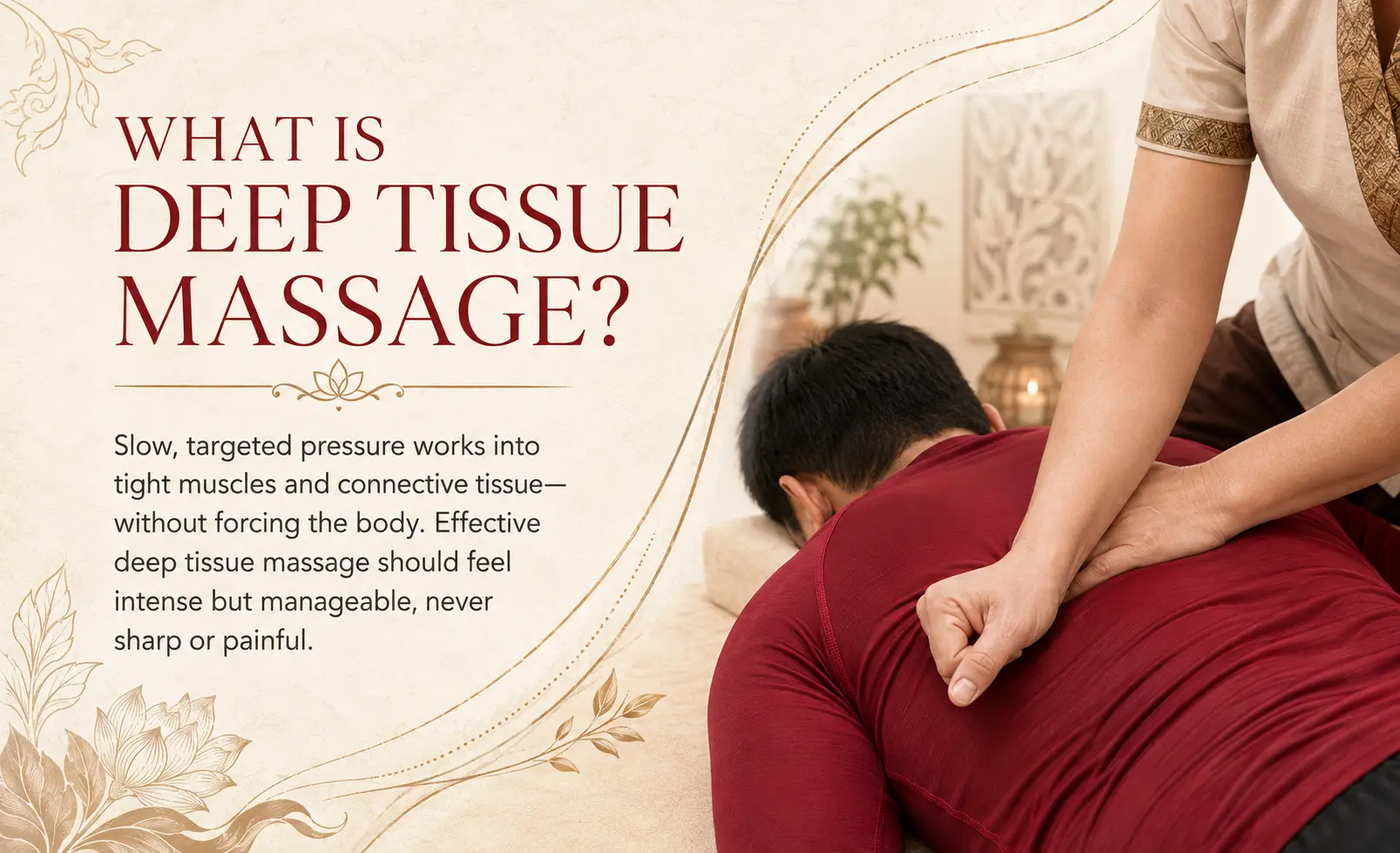
Deep tissue massage uses slow strokes, sustained pressure, and targeted techniques to address tight muscles and surrounding connective tissue. A therapist may pause over a restricted area and gradually increase pressure. Hands, knuckles, forearms, and elbows may be used depending on the location and preferred intensity.
The word “deep” can be misleading. Effective work does not require maximum force. A therapist starts within a comfortable range and adjusts the angle, pace, and intensity as the muscles respond.
Deep pressure should not mean sharp pain
A sensitive knot may feel intense, but the sensation should remain manageable. Sharp pain, numbness, tingling, or an urge to hold the breath means the pressure should change. Clear feedback helps the therapist work more precisely.
Who May Benefit From Deep Tissue Massage?
Deep tissue work generally suits persistent muscular tightness rather than sudden, unexplained pain. Common reasons for booking include recurring shoulder tension, tight hips, lower-back stiffness, or overworked muscles.
Chronic tension and stubborn muscle knots
Desk work, driving, carrying equipment, or repeating the same movement can create patterns of tightness. The neck, shoulders, upper back, hips, and calves are frequent problem areas. Targeted work gives the therapist time to follow those patterns.
Active lifestyles and repetitive movement
Active adults may choose deep tissue massage when certain muscles remain tight between activities. It may support short-term comfort when the issue is muscular tension, but it is not an injury treatment. New swelling, bruising, severe pain, or loss of function should be assessed before massage.
Palms also works with concerns such as low-back tightness, neck and shoulder tension, joint stiffness, and sports-related muscle tightness. More information about the studio’s personalized approach is available on the Palms Thai Massage About Us page.
What to Expect During a Deep Tissue Massage Session
A short consultation before treatment
The appointment should begin with a conversation about areas of tension, preferred pressure, recent injuries, health conditions, and the goal for the session. This helps the therapist decide whether to focus on a few areas or include targeted work within a full-body massage.
The UCSF Health overview of massage recommends sharing health problems, symptoms, and current medications during the initial evaluation so techniques can be adjusted when needed.
Slow, focused work during the session
Deep tissue massage is usually performed on a table with oil or lotion. The therapist may begin with broader strokes before using slower, concentrated pressure. Shoulder tension may also involve the upper back, neck, or arm, so work is not always limited to the exact spot of discomfort.
Pressure can change throughout the appointment because one area may tolerate firm work while another needs a gentler approach. Communication allows the therapist to adapt.
How the body may feel afterward
Some people feel looser immediately, while others notice temporary tenderness. Severe pain, swelling, weakness, or persistent numbness is not an expected result and should be discussed with a healthcare professional.
How Long Should a Deep Tissue Massage Be?
The right duration depends on how many areas need attention and whether targeted work will be combined with general relaxation. More time does not mean more pressure; it gives the therapist room to work gradually.
| Session Length | May Be Suitable For |
|---|---|
| 60 minutes | A first appointment or focused attention on one or two main areas |
| 90 minutes | Several connected areas, such as the neck, shoulders, and upper back |
| 120 minutes | Detailed work across multiple areas with time for a broader full-body session |
At Palms Thai Massage, deep tissue appointments are currently offered at $115 for 60 minutes, $165 for 90 minutes, and $215 for 120 minutes. Current pricing and available treatment options can be checked on the massage services and pricing page before booking.
Is Deep Tissue Massage Safe for Everyone?
Massage therapy generally has a low risk of harmful effects when performed appropriately, but forceful techniques are not suitable for everyone. The National Center for Complementary and Integrative Health advises consulting a healthcare provider when there is uncertainty about massage.
Deep tissue massage may need to be avoided or modified with open wounds, a recent operation, acute injury, bleeding disorder, low platelet levels, or medication affecting blood clotting. Pregnancy can also change suitable positions and techniques. The NCCIH’s chronic pain guidance notes that people with bleeding disorders or taking anticoagulants should avoid forceful and deep tissue massage.
Massage should also not delay medical assessment for severe, worsening, or unexplained symptoms. A therapist can address muscular tension, but a massage appointment is not a substitute for diagnosis.
Deep Tissue vs Thai, Swedish, and Therapeutic Massage
The right style depends on the result expected from the appointment. Deep tissue is only one option, and firmer pressure is not automatically better for every body or every day.
| Massage Style | Main Approach | Common Goal |
|---|---|---|
| Deep Tissue | Slow, firm, targeted pressure | Persistent knots and focused muscular tension |
| Thai Massage | Rhythmic compression and assisted stretching | Flexibility, movement, and full-body work |
| Swedish Massage | Long, flowing strokes with lighter pressure | General relaxation and everyday tension |
| Therapeutic Massage | Techniques selected around a specific concern | Customized, goal-based bodywork |
Thai massage may suit someone who wants stretching and broader movement, while deep tissue is often a closer match for concentrated work on a stubborn area. A detailed breakdown is available in Thai Massage vs Deep Tissue Massage. Those comparing a wider range of treatments can also read the Thai massage spa Bay Area guide.
Deep Tissue Massage San Francisco at Palms
Palms Thai Massage & Wellness provides deep tissue massage at 5754 Geary Boulevard in San Francisco’s Richmond District. The studio is open daily from 10 a.m. to 9 p.m., making it possible to plan a visit around workdays, weekends, or an active schedule.
Each session can be adjusted around pressure preference, comfort, and areas of focus. Two people with shoulder tension may need very different pacing and intensity, so treatment should not assume every client wants maximum pressure.
First-time visitors can review client testimonials for Palms Thai Massage before choosing. When the best style is unclear, describing the goal—relaxation, stretching, or focused muscle work—gives the therapist a starting point.
How to Prepare for a First Appointment
No complicated routine is required before a Deep tissue massage San Francisco appointment. A few steps help the therapist tailor the session:
- Identify the areas that feel tight and the movements that bring on discomfort.
- Share relevant medical conditions, injuries, recent procedures, and medications.
- Explain whether the goal is focused work or a full-body session.
- Choose a pressure preference, knowing it can be changed at any time.
- Speak up if pressure causes sharp pain, numbness, or involuntary bracing.
Sudden weakness, significant swelling, pain after a serious injury, fever, or unexplained neurological symptoms need medical attention rather than an ordinary massage appointment.
Frequently Asked Questions
How much is a deep tissue massage in San Francisco?
Palms lists deep tissue massage at $115 for 60 minutes, $165 for 90 minutes, and $215 for 120 minutes. Confirm current pricing before booking.
Is deep tissue massage supposed to hurt?
No. It can feel firm or intense around a tight muscle, but it should not cause sharp pain, numbness, or a need to hold the breath. Pressure can and should be adjusted during the session.
Can deep tissue massage help muscle knots?
Focused pressure may reduce the sensation of muscular tightness. Results vary, and recurring or unexplained pain may require assessment beyond massage.
How often should deep tissue massage be scheduled?
Frequency depends on the goal, activity level, response after treatment, and whether tension returns. A therapist can suggest timing after the first session.
What is the difference between Thai and deep tissue massage?
Thai massage uses assisted stretching and rhythmic compression, commonly without oil. Deep tissue massage uses slower, more targeted pressure on a massage table and is usually chosen for concentrated muscle work.
Can deep tissue massage help back or shoulder tension?
It may provide short-term relief when discomfort is muscular. The NCCIH review of massage for low-back pain reports possible short-term improvements but limited evidence quality. Severe, persistent, or radiating pain should be evaluated.
Book a Deep Tissue Massage in San Francisco
Deep tissue massage is a practical option when the goal is focused attention on persistent tightness rather than a purely relaxing full-body treatment. The best session is not the one with the strongest pressure; it is the one that matches the body’s needs, stays within a manageable comfort level, and allows enough time for careful work.
Palms Thai Massage offers 60-, 90-, and 120-minute appointments in San Francisco’s Richmond District. Review the session options, choose the length that fits the areas needing attention, and communicate pressure preferences clearly when booking.